ServicesWell Water Treatment
Well Water Treatment in Oconomowoc
When your well water leaves rust rings, smells like sulfur or keeps clogging faucet screens, one filter rarely solves it. We check your well equipment and plumbing, show you photos of what we find, then install only the stages your home actually needs.
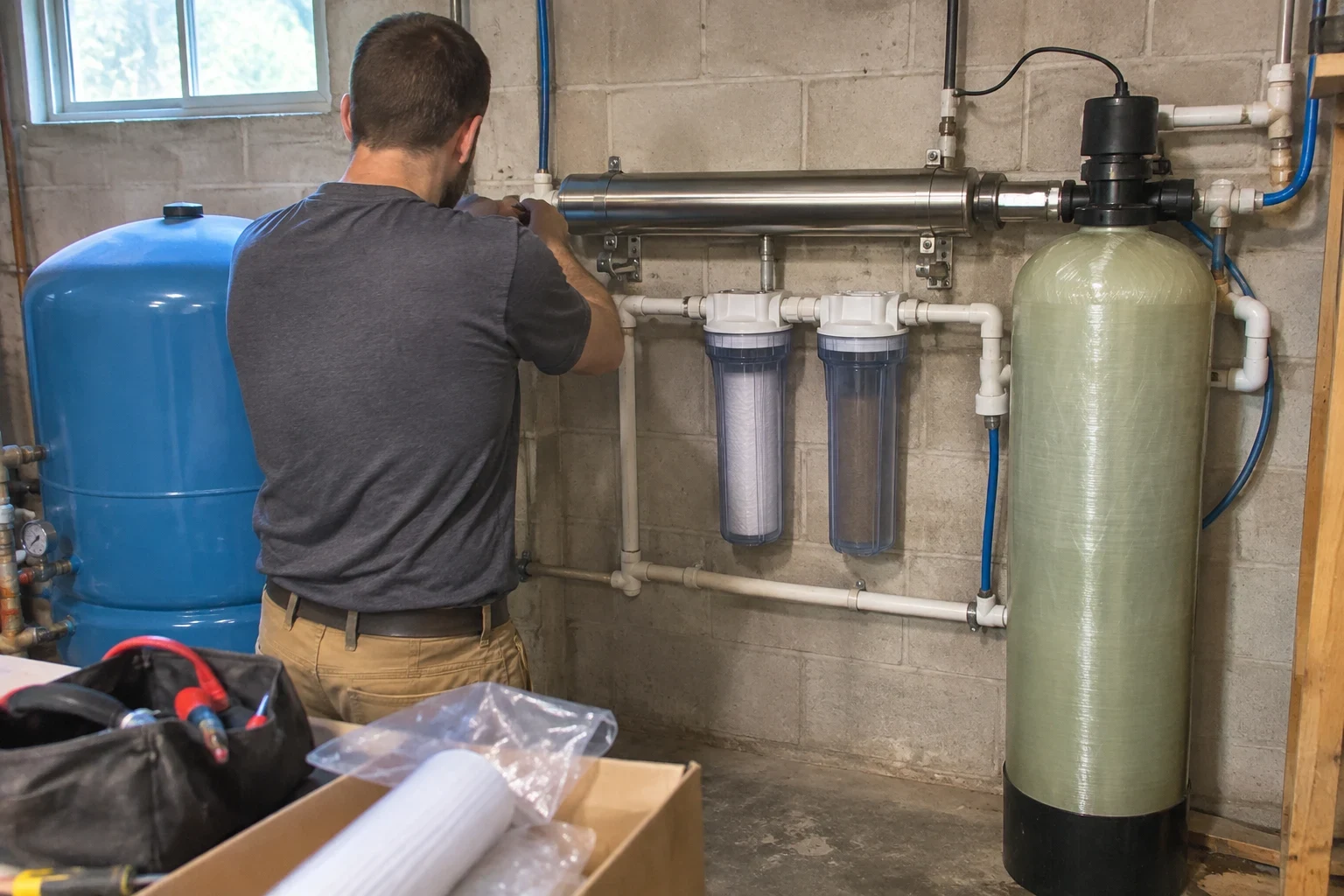
Treatment built around what your well actually puts out
Every private well is a little different. One home has iron that turns the toilet bowl orange, the next has a sulfur smell and hard water that crusts the showerhead. A single cartridge filter rarely fixes all of that, and an oversized system wastes money and floor space.
We start by looking at the whole picture: the pressure tank, any old treatment gear, the plumbing in your utility room, and what you are seeing at the taps. If you have a recent lab report on your well, we go through it with you line by line. We photograph what we find so you can see the same things we see before you decide anything.
From there we recommend the stages that fit. Sometimes that is an iron filter and a softener. Sometimes it is sediment filtration plus a drinking water system. You get the reasons in plain language, not a long list of add-ons.
What a well water system can include
- Iron and manganese removal
- An oxidizing iron filter turns dissolved iron into particles it can trap, then backwashes them down the drain on a schedule. This is what stops the orange and black staining on fixtures and laundry.
- Sulfur odor control
- Hydrogen sulfide gives well water that rotten-egg smell. The same oxidizing filter often handles it, and a carbon stage can catch what remains.
- Sediment filtration
- Sand and silt wear out valves, clog aerators and shorten the life of every appliance that uses water. A sediment filter up front protects everything downstream, including the rest of your treatment.
- Softening for hard well water
- Many wells in this part of Wisconsin carry plenty of calcium and magnesium. A softener after the iron filter keeps scale off your water heater and out of your dishwasher. Our Water Softeners page covers this in more detail.
- Drinking water at the kitchen sink
- For cleaner water to drink and cook with, a reverse osmosis unit under the sink is a common last step. See our Reverse Osmosis page if that is on your list.
Signs your well water needs treatment
Orange or brown staining
Iron from the well leaves reddish marks in toilet bowls, tubs and sinks. You may also spot it on white towels and inside the dishwasher.
A rotten-egg smell
If the smell is at every tap, it is likely in the well water. If it shows up only on the hot side, the water heater may be the source, and we will tell you so.
Grit or sand in aerators
Sediment that keeps clogging faucet screens is also wearing on valves and appliances you cannot see.
White crust and spotty glasses
Scale on showerheads and a film on dishes are signs of hard water, which often comes along with iron on a private well.
Old equipment that stopped keeping up
A filter or softener installed years ago may no longer match what your well is producing. Stains coming back after treatment are a good clue.
How a well water job goes
- 1
A phone call to start
Tell us what you are seeing and smelling. We set a time to come out and give you a free quote.
- 2
A visit with photos
We look at your well equipment, existing treatment, drain access and available space. We take photos as we go and walk you through them, along with any lab report you already have.
- 3
A written quote you can sit with
You get a quote that lists each stage and why it is there. It holds for 30 days, and after you sign you have three business days to cancel if you change your mind.
- 4
Install day
We shut off the water, plumb in each stage with a bypass so you can isolate the system later, connect the drain line and set the backwash schedule. Photos of the finished install show you what went where.
- 5
Walkthrough and payment
Before heading out, we point out where the bypass sits and how to use it, explain salt refills if a softener is part of the setup, and mention anything worth keeping an eye on. Full payment is due once the install is complete.
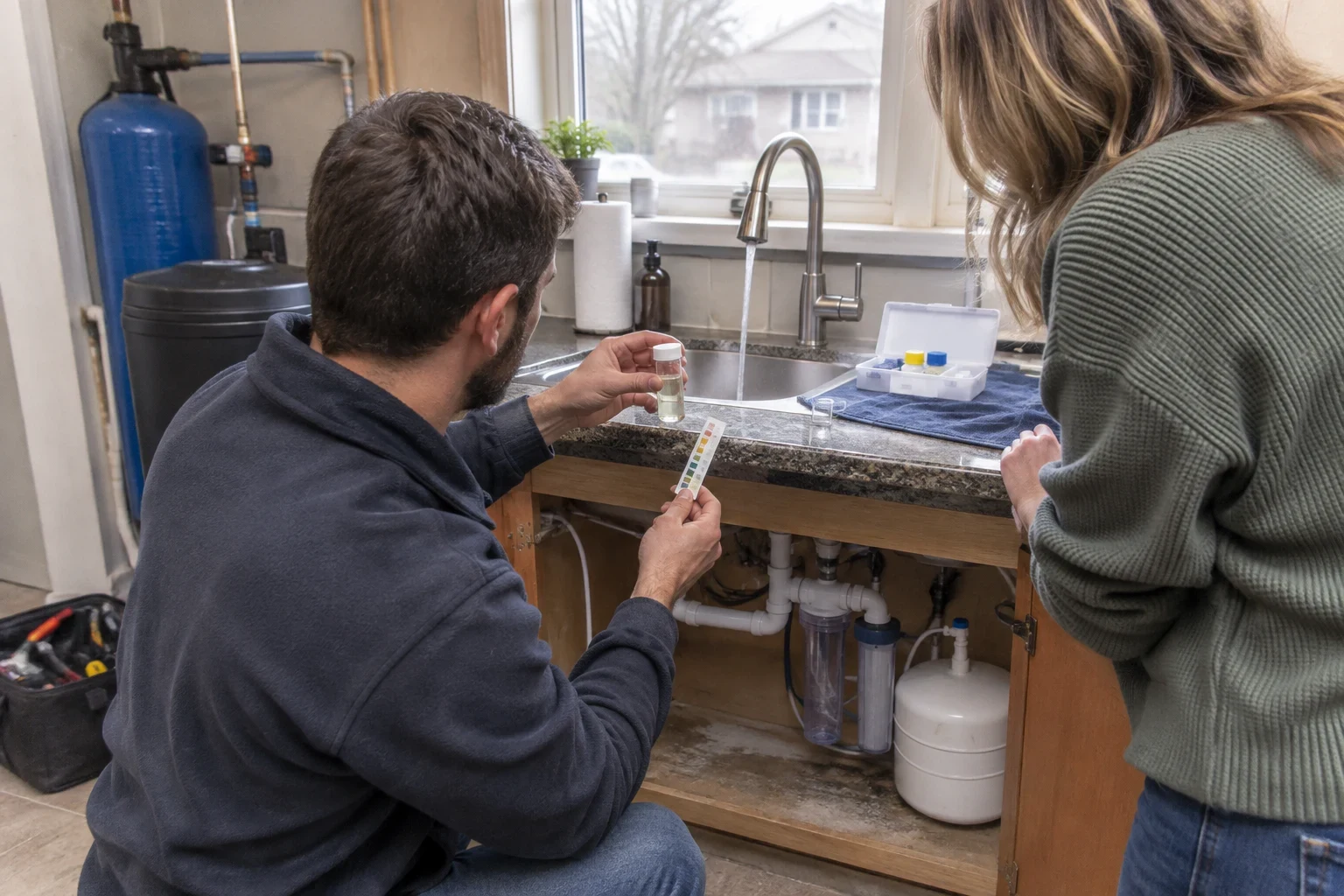
What moves the price of well water treatment
Two wells on the same road can need very different systems, so we price after we have seen yours. The quote you get breaks out each piece so you can see where the cost comes from. Ask us about financing when you call; it is available through U.S. Bank Avvance, on approved credit.
- What is in the water
- Iron alone is a simpler job than iron plus sulfur plus hardness. Each problem may need its own stage.
- How much water your home uses
- Household size and the well's flow rate decide how large the tanks need to be so pressure holds up when the shower and washer run together.
- Space and plumbing access
- A roomy utility area with a nearby floor drain is straightforward. Tight corners, long drain runs or old piping that needs replacing add time and material.
- Existing equipment
- Sometimes an older softener or filter can stay in service. Other times it is worn out, and we will show you exactly why before recommending a replacement.
Well water treatment questions
Something not covered here? (262) 440-9237
Will a water softener alone take care of my iron?
Light iron can pass through a softener without much trouble. Heavier iron coats the resin bed, and before long the rust marks return. Wells with visible staining usually need a dedicated iron filter installed before the softener. We will tell you which situation applies to your home.
Is my shower going to feel weaker after the system goes in?
It shouldn't. When pressure does drop after treatment, the usual culprits are tanks too small for the household or cartridges left clogged too long. We match each stage to how much water your home and your well actually move, so the shower and washer can run at the same time without a fight.
How much upkeep does a well system need?
Most iron filters backwash on their own and need little attention. Softeners need salt added, and sediment or carbon cartridges get changed on a schedule. We go over all of it at the walkthrough so you know what to expect.
The smell is only on the hot side. Do I still need treatment?
Maybe not. A sulfur smell only in hot water often comes from a reaction with the water heater's anode rod, not the well. We will look at both and give you an honest answer before suggesting any equipment.
Do you work on wells outside Oconomowoc?
Yes. We install well water systems for homes around Oconomowoc and in nearby towns such as Delafield, Hartland, Dousman and Merton. Our Service Areas page lists the rest.
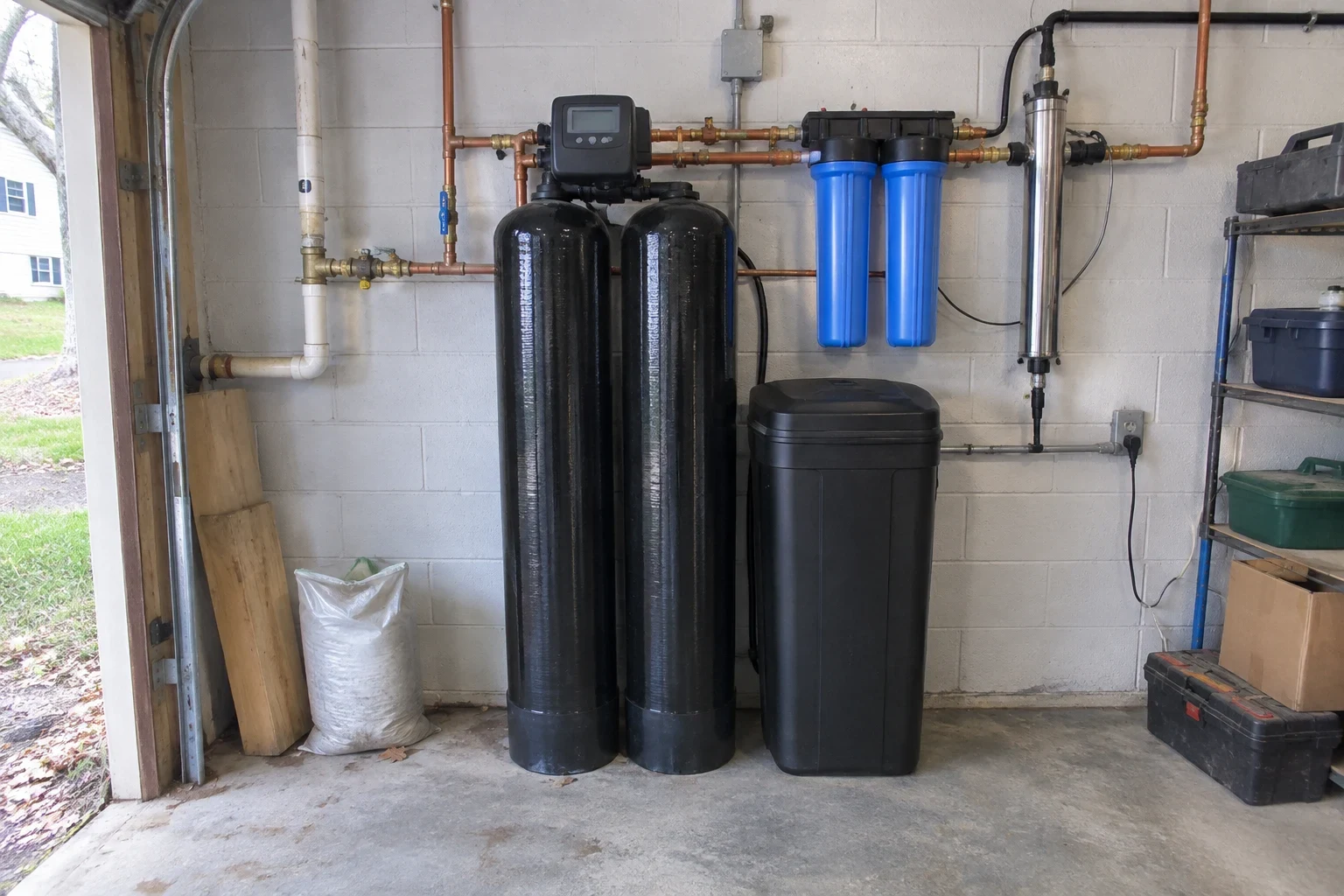
See what your well water needs
Tell us what is showing up in your sinks and laundry, and we will come take a look. You will get a clear quote, a look at what we found and time to decide.