ServicesWater Softeners
Water Softeners in Oconomowoc
Hard water leaves scale in your water heater, spots on your dishes and a crust on every faucet. We size and install a softener that fits your home's water use, and we photograph each step so you can see exactly what was done.
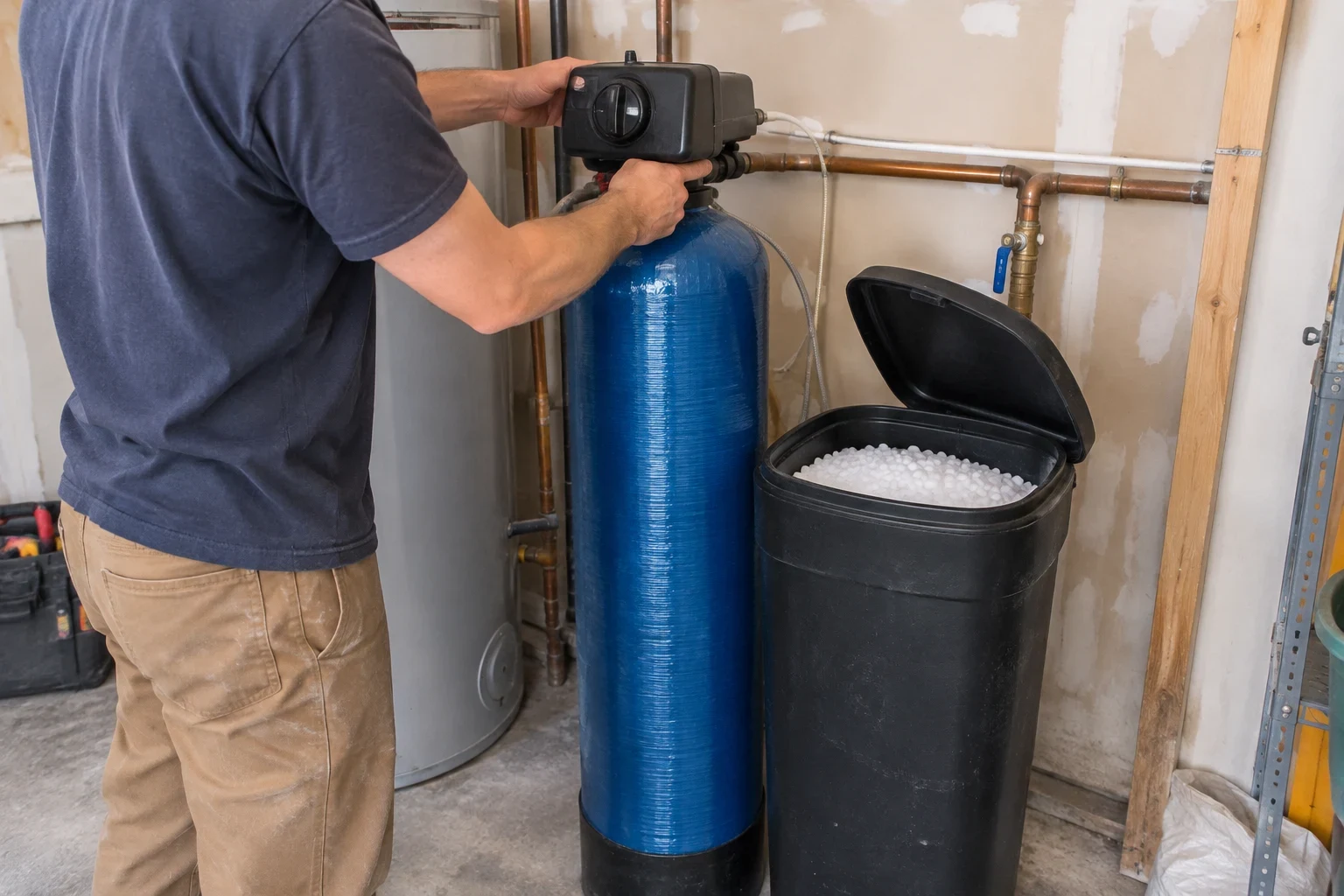
How a softener helps your home
Hardness in water comes from calcium and magnesium, and a softener removes them before the water travels through your pipes, fixtures and appliances. The tank holds resin beads that grab those minerals and release sodium or potassium in their place. Once the beads are loaded up, the unit flushes them with brine from the salt tank and goes back to work.
Plenty of homes around Oconomowoc deal with hard water, which is why softeners are such a common upgrade here. Getting a good result is mostly about fit: the grain capacity, the size of your household and the way the valve chooses when to regenerate. Go too small and the unit cycles nonstop and wears out sooner. Go too large and you pour money into extra salt and water.
We try to keep it straightforward. We look over your plumbing, ask how your family uses water and tell you which size makes sense. You will know what you are buying and the reason for it before you say yes.
What your softener installation covers
- Capacity matched to your family
- We work out grain capacity from the size of your household and your typical daily water use. Then we explain the math in plain language so you know why we chose that size.
- Removal of the old softener
- If you already have a unit, we disconnect it, cap lines where needed and haul it away. Your garage or basement stays clear of old equipment.
- Bypass valve and a proper drain
- With a bypass in place, you can isolate the softener and still have running water everywhere else in your home. The drain line gets an air gap, so softener discharge can never flow back into your water supply.
- Regeneration based on actual use
- We set up a control valve that counts gallons and regenerates only when the resin is spent, not by the calendar. When the house is quiet or you are traveling, it uses less salt and water.
- A photo record of the job
- We take pictures of your existing setup, the new connections and the completed install. They are yours to keep, which helps if anyone ever asks what was done.
- First startup and a quick lesson
- We fill the brine tank, run the first regeneration and show you how to add salt and use the bypass.
When it may be time for a softener
Chalky buildup around fixtures
A white ring that reappears on faucets and showerheads days after you wipe it away is mineral residue left as the water evaporates.
Hazy glassware
When glasses keep coming out of the dishwasher cloudy no matter which detergent you buy, hardness is usually the cause rather than the machine.
Crackling noises from the water heater
Scale settles on the bottom of the tank and traps water underneath, which then bursts through with a popping sound. That layer also forces the heater to use more energy to warm your water.
Poor lather and soap film
Hard water fights soap, so you go through more shampoo and detergent. A dull film still shows up on the tub and on your skin.
A softener that can no longer keep up
Returning spots, a hard salt crust in the brine tank or a unit that regenerates every night are all signs of tired or undersized equipment.
How the work goes on install day
- 1
Free quote by phone
Call us and tell us about your home and what you are seeing. We talk through options and set a time to look at your plumbing. Your quote holds for 30 days.
- 2
Look and photograph
We check where your water enters the house, the space for the tanks and where the drain will go. We take photos of what we find and show them to you.
- 3
Install and connect
We shut off the water, remove any old equipment and plumb in the new softener with its bypass and drain line. We protect the floor where we work and keep the mess contained.
- 4
Start up and clean up
We load salt, program the valve and run a regeneration. Then we clean up, send you the photos and walk you through how it all works. Full payment is due once the install is complete.
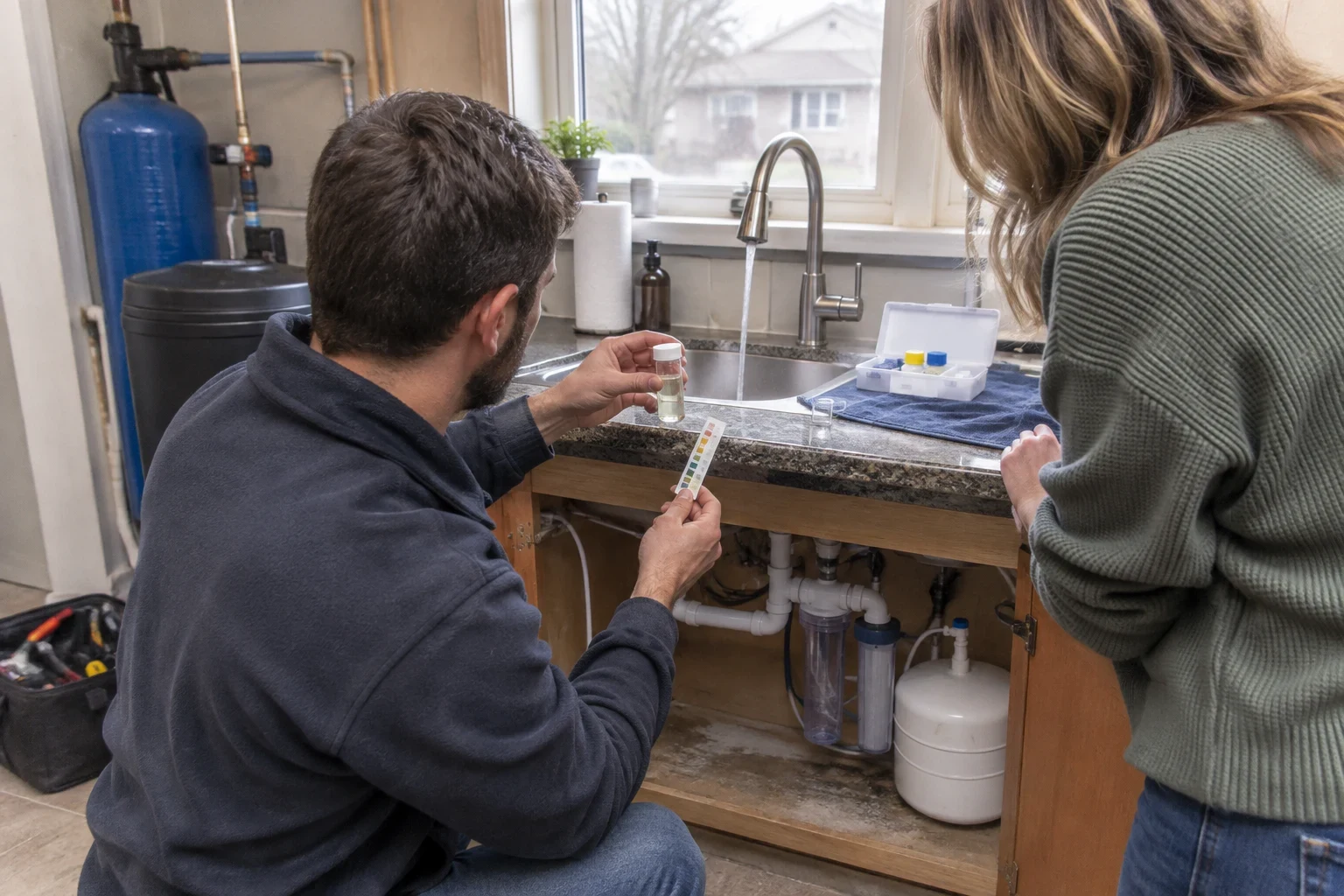
What goes into the price of a softener
Every basement and utility room is plumbed a little differently, so we set your price after we have seen your setup in person. Your quote breaks the job into separate lines, so you can see where each part of the cost comes from. If paying over time works better for you, U.S. Bank Avvance offers financing, on approved credit.
- Tank size and grain capacity
- A bigger household strips more hardness out of the water between regenerations, and a larger resin tank carries a higher price. We match capacity to what your family really uses instead of steering you toward the biggest unit available.
- Metered valve versus timer
- A valve that regenerates on demand costs somewhat more up front than a basic timer model. It usually earns that back over time through the salt and water it saves.
- Plumbing work at your home
- Installing a new loop, relocating a line or running a long drain line adds parts and labor. Copper, PEX and older galvanized pipe each need their own fittings, and that shows up on the quote too.
- Removing existing equipment
- If an older softener is already in place, taking it out and disposing of it is a separate line. When there is nothing to remove, that charge simply is not there.
- Pairing with other systems
- Adding whole-home filtration for taste or reverse osmosis under the kitchen sink changes how everything is laid out. Planning the pieces at the same time shapes the overall price.
Common questions about softeners
Something not covered here? (262) 440-9237
How often will I need to add salt?
That comes down to how much water your household runs and how big the unit is. Most families glance into the brine tank every few weeks and pour in a bag once the level drops. Because a metered valve regenerates only when the resin is actually spent, a bag usually goes further.
Why does softened water feel slippery?
You are feeling water without calcium and magnesium in it. Soap rinses away fully instead of leaving a film on your skin, and that clean rinse can feel slick at first. Most people stop noticing it after a week or two.
Is softened water okay to drink?
The softening process adds a little sodium to the water. If you are limiting sodium, potassium chloride can replace salt in the brine tank. Another option is a reverse osmosis system at the kitchen sink, which gives you separate water for drinking and cooking.
I am on a private well. Is a softener enough?
Well water often carries iron, a sulfur smell or sediment on top of hardness. A softener can manage light iron, but heavier problems call for dedicated equipment. We cover those systems under well water treatment and are happy to talk through both when you call.
What if I change my mind after signing?
After you sign, you still have three business days to cancel. Your quote also stays good for 30 days, so there is no rush to decide the day we visit.
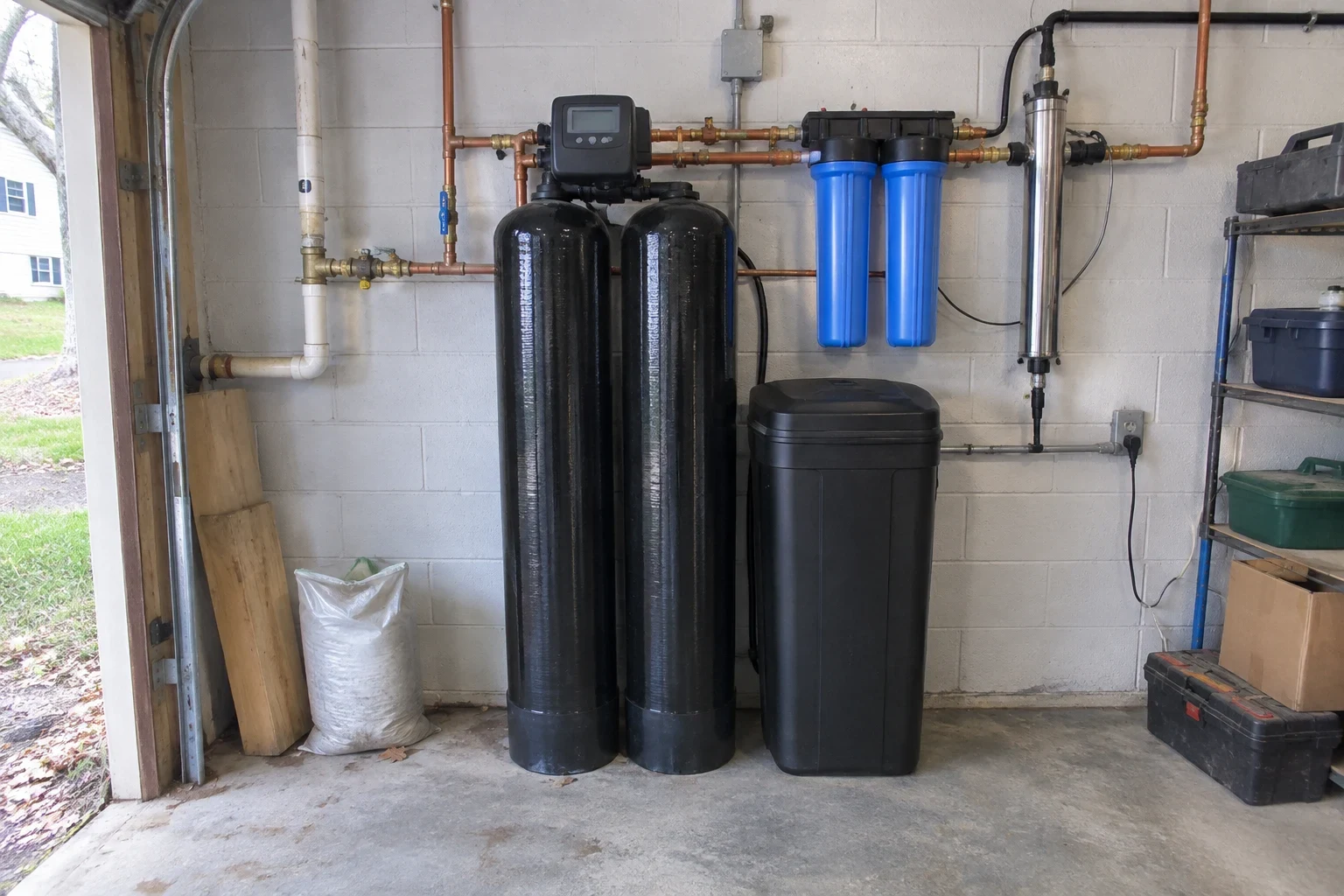
Ready to be done scrubbing scale?
Tell us about your home and the problems you are seeing. We will give you a clear quote and answer any questions about financing.