ServicesReverse Osmosis
Reverse Osmosis Systems in Oconomowoc
An under-sink reverse osmosis system puts filtered water for drinking, cooking, coffee and ice right at your kitchen sink. When the job is done, you get photos of the cabinet as we found it, each connection we made and the finished setup, so nothing under your sink is a mystery.
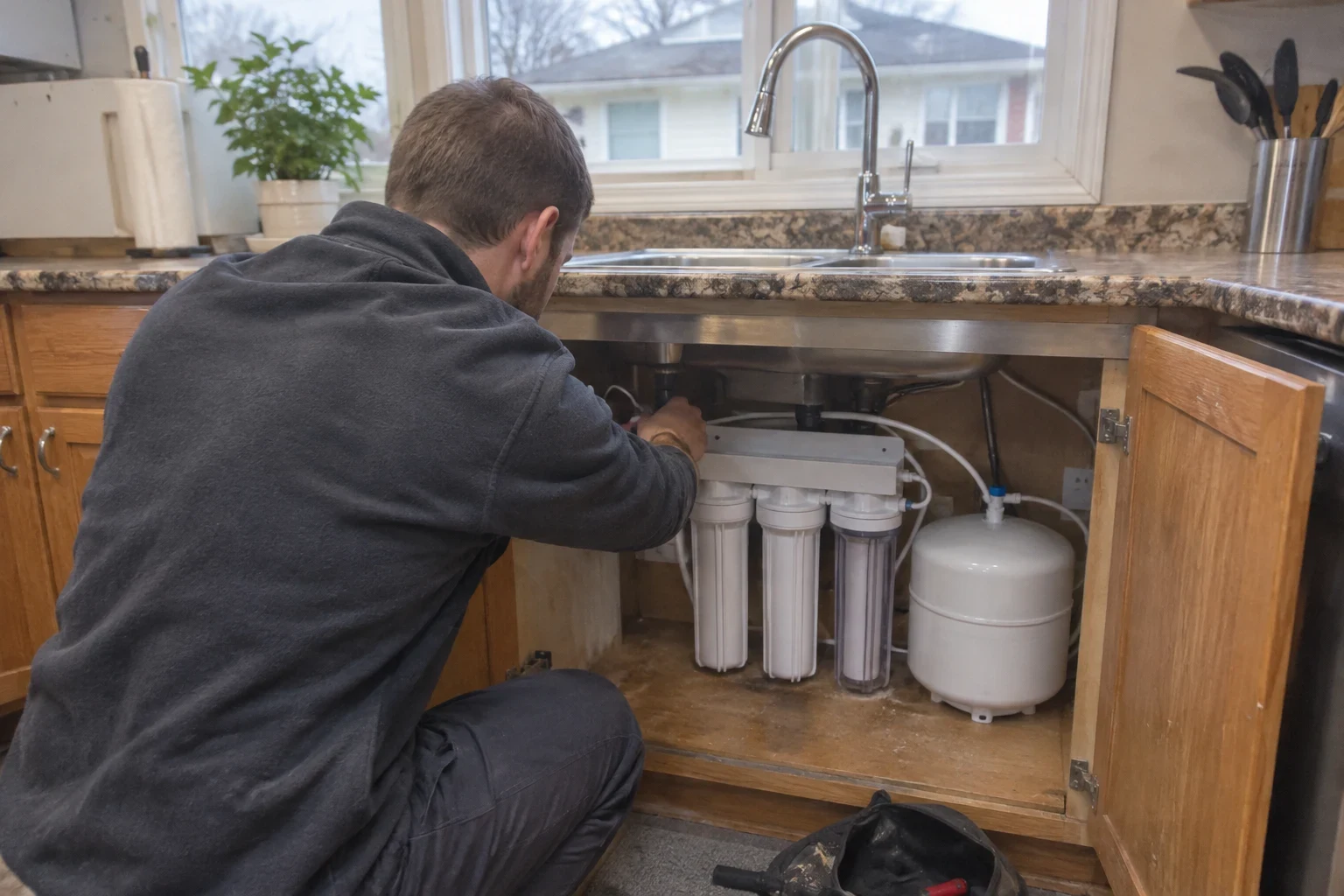
How Reverse Osmosis Works in Your Home
An RO system uses your household water pressure to push water across a semipermeable membrane. Most dissolved salts and minerals can't get through, and the membrane also cuts lead that can come from older plumbing, plus nitrates and sodium. A sediment cartridge up front traps grit, and carbon stages on either side of the membrane take care of chlorine taste and smell. Treated water sits in a compact tank, or on a tankless unit, flows on demand to a separate faucet.
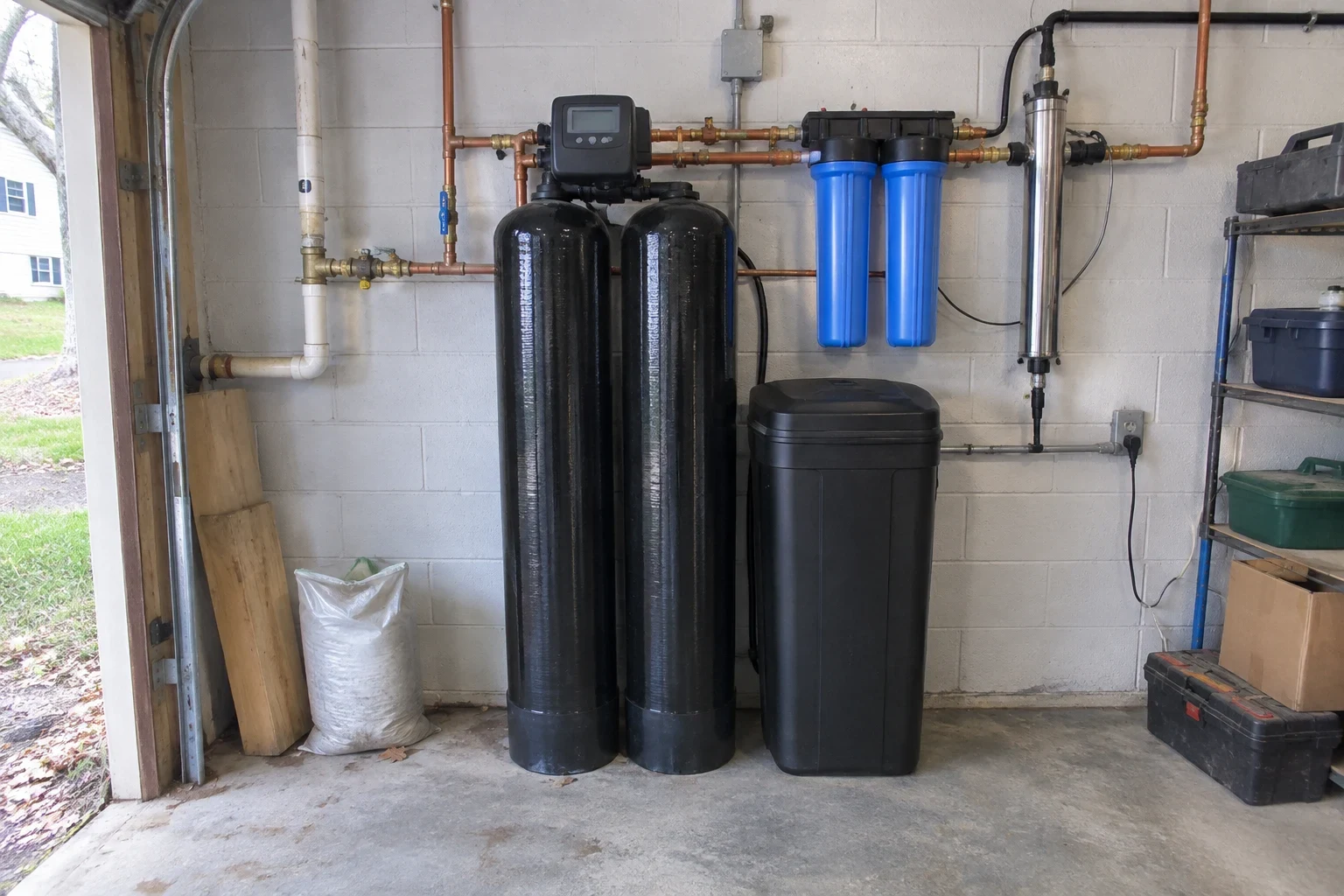
This is a point-of-use system. It treats water at one place, most often the kitchen sink, instead of at every faucet and appliance. That makes sense if your main concern is the water your family drinks and cooks with, not the shower or washing machine. For whole-house needs, see our Whole-Home Filtration and Water Softeners pages; RO pairs well with both.
Plenty of homeowners in Oconomowoc add RO soon after a softener goes in, since softened water picks up some sodium. Others rely on a private well and like having one more barrier between the well and their kids' drinking glasses.
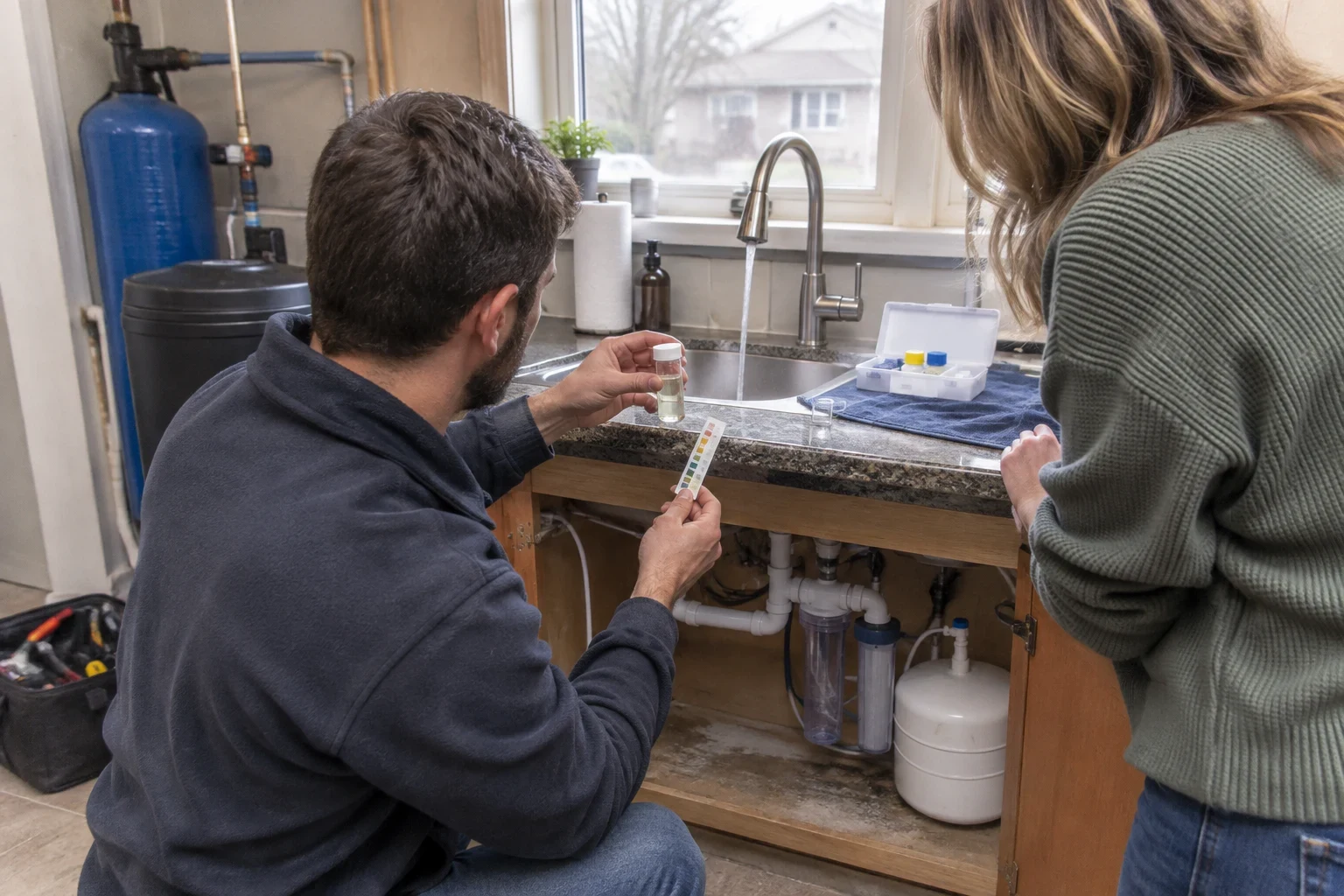
What We Do on Your RO Install
- 01
Checking under the sink first
We look at cabinet room, the cold supply, the drain and what your countertop is made of. Anything worth noting, like an aging valve, corrosion or a slow drip, goes into a photo you can see before work begins.
- 02
A faucet just for drinking water
Your RO faucet sits next to the main one. An unused sprayer or soap dispenser hole is our first choice for it. If a new hole is needed, we agree on the spot with you before we drill.
- 03
Careful supply and drain hookups
The unit gets its own shutoff on the cold line, and the reject line ties into your drain so it stays quiet and doesn't back up. Rushed installs tend to leak at these joints, so we slow down here.
- 04
Fridge or ice maker line if you want one
We can run RO water to your refrigerator dispenser or ice maker. Clearer, better tasting ice is often the change people spot first.
- 05
Testing every fitting before we leave
We run fresh water through the new cartridges to clear them, then go over each connection for drips. You'll learn how to change the filters, and you keep the before and after photos of the job.
Questions about Reverse Osmosis?
Call(262) 440-9237When Reverse Osmosis Makes Sense
You buy bottled water every week
Lugging cases from the store gets old. With RO, you fill a pitcher or bottle at your own sink and cut way down on plastic.
Drinking water tastes a little salty
A softener trades hardness minerals for sodium. RO strips most of that sodium back out of the water you drink, a help for anyone watching salt.
Your house has older plumbing
Aging pipes and solder joints can release lead at the faucet. Reverse osmosis is among the most effective ways to bring it down in drinking water.
You rely on a private well
Keeping well water safe falls to the owner, and nitrates are a frequent worry. RO guards the kitchen tap, and our Well Water Treatment page covers the rest of your home.
Coffee and ice seem off
Chlorine and dissolved solids can dull the flavor of coffee and tea and cloud your ice cubes. Cleaner water usually clears up both.
How Your RO Install Day Goes
- 1
A quick phone call
Tell us about your home, your sink and what is bothering you about your water. We set up a visit and give you a free quote.
- 2
Photos before we touch anything
We photograph the cabinet, supply valves and drain as we find them. If something needs fixing first, like a failing shutoff, you see it and decide.
- 3
Installation
We shut off the cold water, protect your cabinet floor, mount the system and faucet, and make the connections. Most installs take part of a day.
- 4
Flush, check and clean up
We run the system, check every fitting for drips and tidy the cabinet and counter. Then we take the after shots and walk you through cartridge changes.
What Shapes the Price of an RO System
Two things drive most of the number: which unit fits your needs and what we find under your sink and on your countertop. You get a written quote with each part of the job on its own line, and that price stays good for 30 days. You pay in full once the install is finished, not up front.
- Tank or tankless
- A traditional system with a storage tank is the more affordable choice. Tankless units deliver water faster and cost more. Adding a remineralization stage, which puts a touch of calcium and magnesium back in for flavor, also raises the price.
- Where the faucet goes
- An existing sprayer or soap dispenser hole makes faucet mounting quick. Quartz, granite and other stone tops call for a diamond bit and patient drilling, so they add labor time.
- Fridge and ice maker hookups
- Sending RO water to your refrigerator means more tubing and more labor. A long run across the kitchen or down to a basement costs more than a short one.
- Valves and drain condition
- A stuck or corroded shutoff sometimes has to be replaced before we can connect anything. We show you a photo of it, and you decide whether to add that work.
Common Questions About Reverse Osmosis
How much water goes down the drain?
Part of the water that enters an RO unit is used to flush minerals off the membrane, and that portion leaves through the drain line. Today's models send far less to the drain than units from years ago. When we quote, we tell you the ratio for each option so you can weigh it against the price.
How often will I change cartridges?
Plan on new sediment and carbon cartridges roughly once a year. The membrane goes longer, depending on your water and how much your family uses. On install day we walk you through a cartridge swap, which takes just a few minutes once you have done it.
We have a softener already. Is RO still worth it?
Your softener guards pipes, fixtures and appliances against hardness, but it isn't designed to improve drinking water, and it raises sodium a little. RO takes care of the glass you drink from. The two pair well, and softened water is easier on the RO membrane.
Will my kitchen faucet lose pressure?
Your main faucet keeps working just as it does now. RO water comes out of a separate small faucet, and its stream is softer than a regular tap.
Is there a way to pay over time?
There is. Financing is available through U.S. Bank Avvance, on approved credit, and we can go over it when you call. After you sign, you still have three business days to cancel.
Ready for Better Water at Your Kitchen Sink
Give us a call and tell us about your home and your water. We will set up a visit, give you a free quote and answer your financing questions.