What Does a Water Softener Actually Do to the Water in Oconomowoc Homes?
A plain look at what changes inside the tank, what changes at your faucet, and what a softener leaves alone.
What does a water softener actually do to the water?
A water softener removes the calcium and magnesium that make water hard and replaces them with a small amount of sodium or potassium. It does this with resin beads inside a tank, a process called ion exchange. The result is water that stops leaving scale, lathers more easily, and is gentler on fixtures and appliances.
What makes water hard in the first place
Rain soaks into the ground and picks up minerals as it moves through rock. Much of the groundwater in southeast Wisconsin passes through limestone and dolomite, which give up calcium and magnesium along the way. Those dissolved minerals are what people mean by hardness.
Hard water is safe to drink. The trouble shows up when it's heated or left to dry, because the minerals come out of the water and stick to whatever they touch.
- White crust around faucets and showerheads
- Spots and film on glasses after the dishwasher
- Soap and shampoo that won't lather well
- Scale building up inside the water heater
How a softener swaps out the minerals
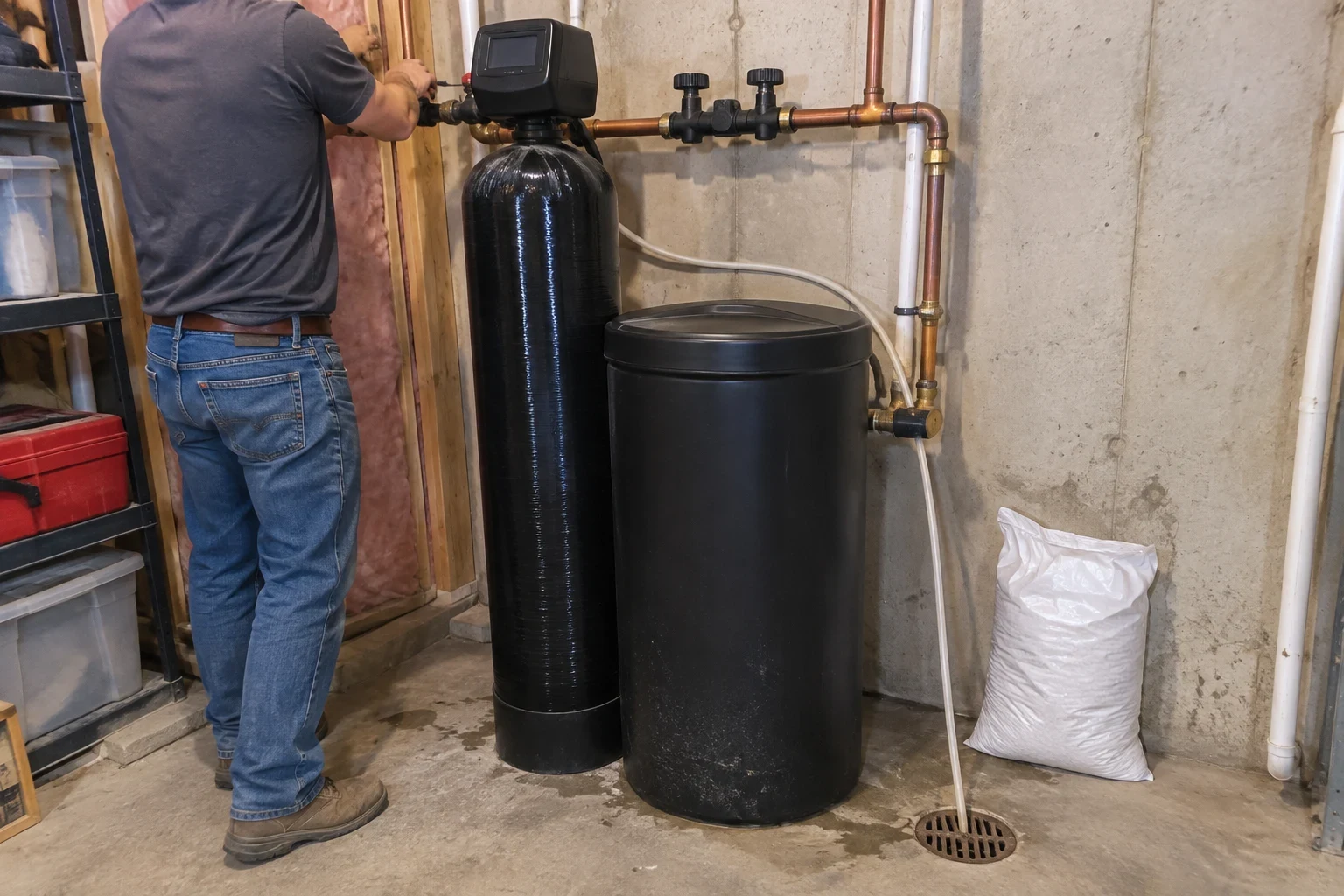
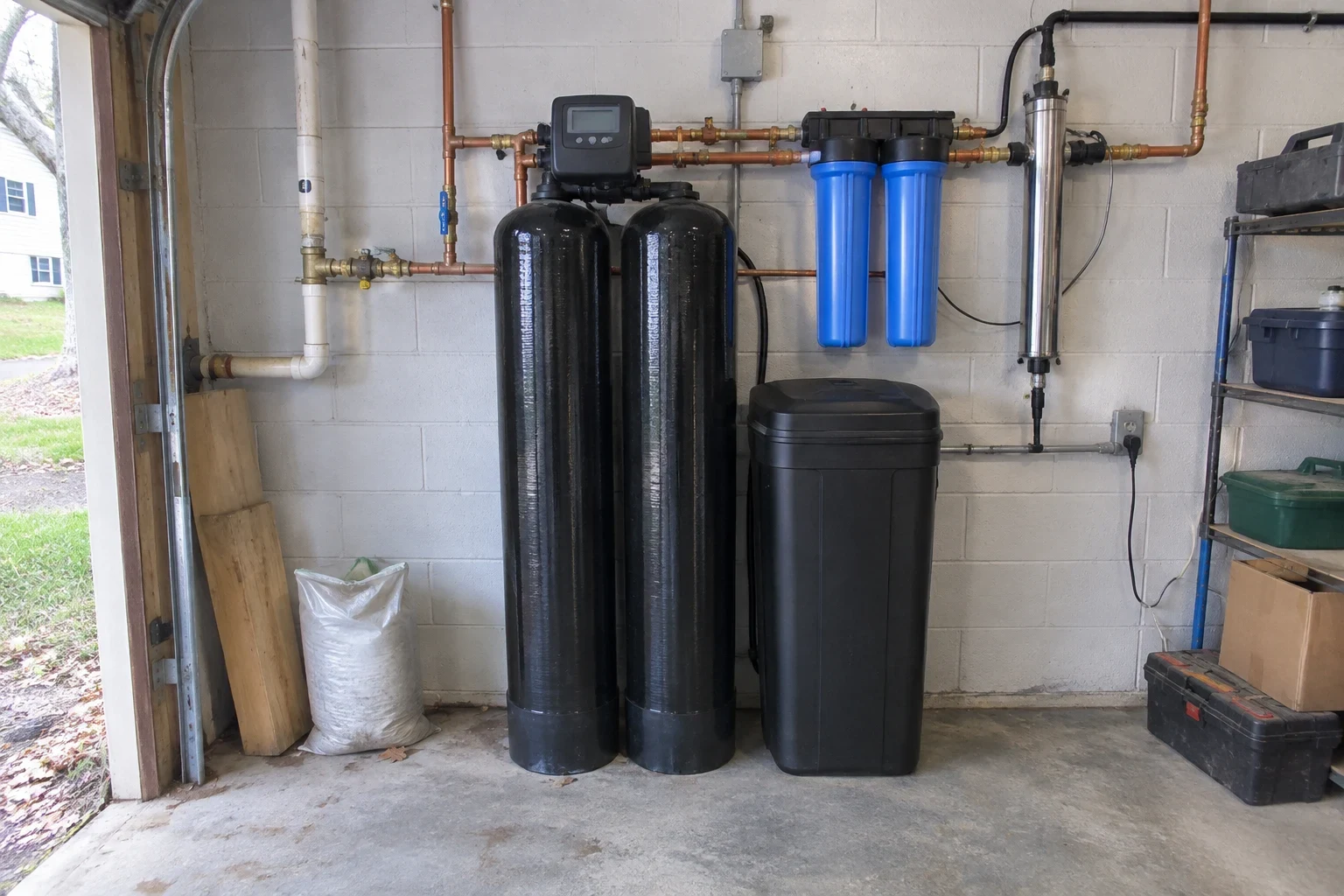
A softener has two main parts. The tall tank holds thousands of small plastic resin beads, and a second tank holds salt and water, called brine. As water flows through the resin, the beads grab calcium and magnesium and release sodium in their place.
Over time the beads fill up with hardness minerals. When that happens, the control valve on top starts a cleaning cycle called regeneration, usually at night when nobody is running water. Once it finishes, the beads are ready to soften again.
- Backwash: water flows upward to loosen the resin and flush out sediment
- Brine draw: salty water from the brine tank washes over the beads and knocks the hardness loose
- Rinse: fresh water clears the leftover brine and minerals to the drain
- Refill: the brine tank refills so salt can dissolve before the next cycle
What you'll notice around your home
Most people notice the shower first. Soap rinses off differently, and skin and hair can feel smoother. Some describe softened water as slippery, which is simply the absence of minerals that used to bind with soap.
The longer-term changes are quieter. Less scale means your water heater, dishwasher and washing machine aren't fighting a mineral layer, and you'll spend less time scrubbing faucets and glass shower doors. Many households also find they can use less detergent and soap than before.
What a water softener does not do
A softener is built for one job, and it helps to be clear about its limits so you aren't oversold. It does not remove chlorine taste or odor, and it is not designed to take out lead, bacteria, nitrates or other contaminants. Softened water is not purified water.
It can handle small amounts of dissolved iron, but heavier iron, rotten-egg sulfur smell or other well water problems usually need their own equipment. That's where well water treatment comes in. For chlorine taste throughout the house, whole-home filtration is the better tool, and for drinking and cooking water many families add reverse osmosis at the kitchen sink.
Softening also adds a small amount of sodium to the water. If you're watching your sodium intake, a reverse osmosis system at the kitchen tap removes most of it, or you can run the softener on potassium chloride instead of salt.
How we size and install a softener in your home
Sizing matters more than brand. A softener that's too small regenerates constantly and wastes salt, while one that's too big can sit idle long enough to cause problems. We look at how many people live in your home, how much water you use, your plumbing layout and the hardness you're dealing with before we recommend anything.
On install day we usually set the unit near where the main water line enters, often in the basement, add a bypass valve so you can shut it off without cutting your water, and run a drain line for regeneration. Many homeowners choose to leave the outdoor spigots on hard water, since there's no need to soften what goes on the lawn.
We take photos at each step, from the existing plumbing before we touch it to the finished connections and drain line, so you can see exactly what was found and what was done. Your quote holds for 30 days, and financing is available through U.S. Bank Avvance, on approved credit.
More questions about water softeners
Something not covered here? (262) 440-9237
Does softened water taste salty?
Usually not. The sodium added is small enough that most people can't taste it, though very hard water starting out means a little more sodium ends up in the water.
How often will I need to add salt?
It depends on your water use and hardness, but many households check the brine tank once a month and top it off when the salt drops below the water line. A family that runs a lot of laundry will go through salt faster.
Does a softener need electricity and a drain?
Yes. The control valve needs a standard outlet to run its timer or meter, and regeneration water needs a drain such as a floor drain or laundry standpipe nearby.
Can a softener protect my water heater?
It helps a great deal by keeping new scale from forming inside the tank and on heating elements. It won't dissolve heavy scale that's already built up over years, so an older heater may still need flushing.
Find out what a softener would do for your home
Give us a call and we'll talk through what you're seeing at the tap, set up a visit, and put together a free quote with photos of your current plumbing. Ask about financing information while you're on the line.